Skip to content

BMW i4 eDrive40

525 km of observed real-world range, second only to the Tesla Model 3 Long Range, from a conventional 400-volt car that does nothing clever except be efficient and have a big battery. It also keeps 86 per cent of its WLTP figure, as much as anything here.

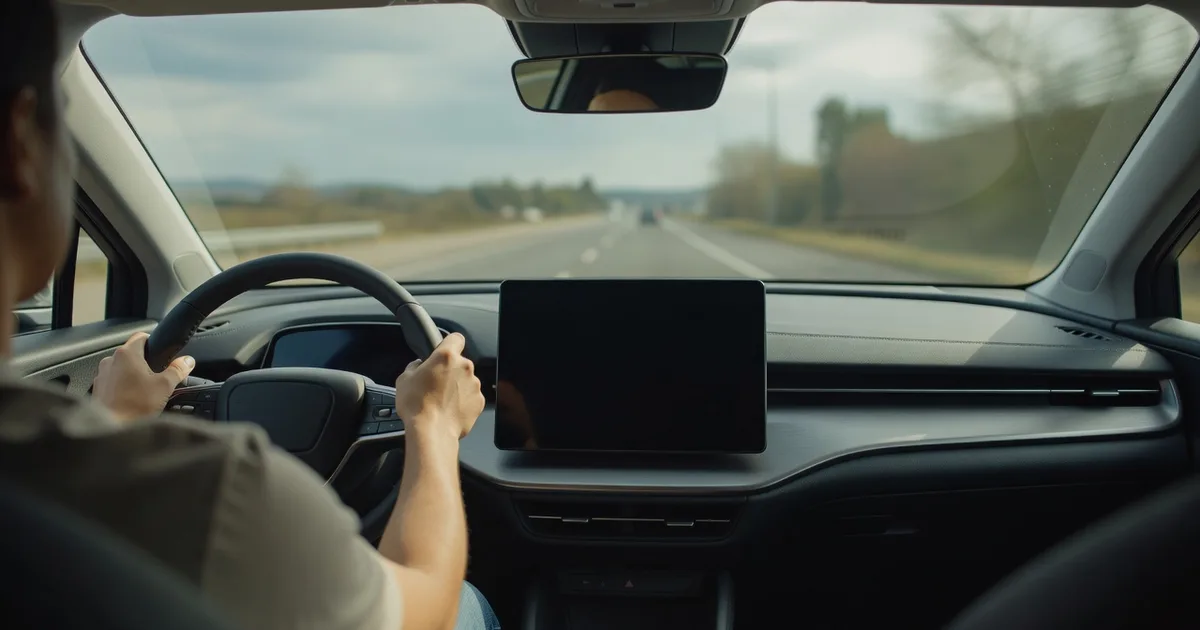
Interior view from the passenger seat of an electric car dashboard with a blank dark screen
Real-world range
326 mi
Usable battery
81.3 kWh
10-80% charge
28 min
Battery safety score
5.3/10How this is calculated

The i4 eDrive40 does well in the row most people actually care about. Its 525 km of observed real-world range is second only to the Tesla Model 3 Long Range, and ahead of every car here with a larger battery or a much higher WLTP claim. It gets there through a large pack, a genuinely efficient single rear motor and a body that was designed as a conventional saloon rather than an aerodynamic statement.

Range instead of charging speed

205 kW peak and twenty-eight minutes from 10 to 80 percent is ordinary. The i4’s answer to fast charging is not needing it as often: on a 600 km journey it plausibly stops once where a shorter-range car stops twice, which cancels out a good deal of the Ioniq 6’s charging advantage.

The catch

It is expensive for what it is — €60,600, several thousand more than the ID.7 or the Seal — and the i4 is built on a platform shared with the petrol 4 Series, which costs it boot space and rear headroom compared to purpose-built electric saloons. If you value the way a BMW drives, that is a reasonable trade. If you do not, the ID.7 gives you more room for less money.

Charging time and running cost for the BMW i4 eDrive40 are worked out in full on its own page. It works the numbers through at every charger power, with the tariff and efficiency assumptions printed rather than assumed: BMW i4 eDrive40 charging time and cost.

Frequently asked questions

How far does the BMW i4 eDrive40 really go on a charge?

The BMW i4 eDrive40 covers about 525 km in independently observed mixed driving, 613 km on the WLTP cycle, 333 miles on the EPA cycle. That observed figure is about 86 per cent of the WLTP claim — a shortfall is normal for every electric car, and what matters is that this one is predictable rather than that it exists. We rank the size of that gap across the database on claimed vs real range.

How long does the BMW i4 eDrive40 take to charge?

From 10 to 80 per cent on a DC rapid charger it takes about 28 minutes, peaking at 205 kW. That puts it mid-pack among the 18 cars we hold charging data for. On AC at home it accepts up to 11 kW. The peak figure on its own tells you very little — this ranking explains why the window is the honest measure.

How long will the BMW i4 eDrive40’s battery last?

The battery is warranted for 8 years or 100,000 miles, with replacement if capacity falls below 70 per cent. Our projection puts it at roughly 84 per cent of original capacity after eight years. That is an estimate, not a measurement: nobody publishes per-model degradation data, so it applies the published rate for this vehicle class and is labelled as an estimate everywhere it appears. The reasoning is set out in full on the methodology page, and we compare warranty terms across the database on best EV battery warranties.

Who should buy the BMW i4 eDrive40?

On our data it is one of the most efficient cars here at 155 Wh/km, which is what keeps the running cost down; among the longest-legged at about 525 km observed. Whether that suits you depends on how much of your charging happens at home and how often you drive beyond one charge — the running cost calculator takes your own mileage and tariff, and the comparison tool puts this car next to any other in the database.

Full specifications

Market & identity

Where the car is actually sold. Fields left empty for a market render as "not sold here", never as zero.

Model year2026
Body stylesedan
Seats5
Curb weight4,674 lb
Sold in the USYes
Sold in the EU/UKYes

Battery

Pack chemistry and construction. Usable capacity, not gross, is what the car can actually deliver.

Cell chemistryLFP tolerates daily charging to 100% and is the most thermally stable; NMC and NCA pack more energy per kilogram.NMC
Pack architecture400 V
Gross capacity83.9 kWh
Usable capacityThe figure every range and cost calculation on this site is based on.81.3 kWh
Thermal managementActive liquid or direct-refrigerant cooling is the strongest single predictor of slow degradation and repeatable fast charging.liquid-active
Pack voltage800 V architectures hold high charging power for longer and waste less energy as heat.399 V
Capacity loss per yearRate for this vehicle class from published fleet datasets, not a measurement of this model and not a manufacturer claim.2.0% / year estGeotab EV battery degradation study, 2025 — passenger-car class rate, not a measurement of this model · 2026-09
Projected state of health at 8 yearsModelled from the observed degradation rate at average annual mileage. An estimate, not a measurement.84% estStraight-line projection from the class rate above; method published at /methodology/ · 2026-09

Range & efficiency

EPA, WLTP and CLTC are different tests, not different opinions about one number. They sit side by side here and are never converted into one another.

EPA rangeUS EPA combined cycle, the most conservative of the three official tests.333 miEPA fueleconomy.gov — 2026 BMW i4 eDrive40 Gran Coupe (18 inch wheels) · 2026-09
EPA range, cityThe city half of the EPA combined rating. Usually the higher of the two for an electric car.341 miEPA fueleconomy.gov – 2026 BMW i4 eDrive40 Gran Coupe (18 inch wheels), certification record 50188 · 2026-09
EPA range, highwayThe highway half of the EPA combined rating, and the figure to plan a long drive around.323 miEPA fueleconomy.gov – 2026 BMW i4 eDrive40 Gran Coupe (18 inch wheels), certification record 50188 · 2026-09
EPA consumption, city27.8 kWh/100 miEPA fueleconomy.gov – 2026 BMW i4 eDrive40 Gran Coupe (18 inch wheels), certification record 50188 · 2026-09
EPA consumption, highway29.4 kWh/100 miEPA fueleconomy.gov – 2026 BMW i4 eDrive40 Gran Coupe (18 inch wheels), certification record 50188 · 2026-09
WLTP rangeEuropean combined cycle, typically 15 to 25 percent more optimistic than EPA for the same car.381 mi
Observed real-world rangeMixed-conditions figure from independent testing. This is the number that matters on a road trip.326 mi
EPA consumption28.5 kWh/100 miEPA fueleconomy.gov — 2026 BMW i4 eDrive40 Gran Coupe (18 inch wheels) · 2026-09
Real-world consumption249 Wh/mi

Charging

Peak power is a marketing number. The 10 to 80 percent time and the shape of the curve are what you actually wait through.

Peak DC powerHeld briefly, often only inside a narrow state-of-charge window.205 kW
10 to 80 percent DC charge timeThe honest measure of fast-charging speed.28 min
AC onboard chargerSets how fast the car fills up overnight at home.11 kW
DC connector (Europe)CCS2EV Database — BMW i4 eDrive40 (2025-2026), fast-charging port listed as CCS (Combined Charging System, CCS Combo 2) · 2026-09

Performance

Acceleration is quoted per market: manufacturers publish 0-60 mph in the US and 0-100 km/h in Europe, measured differently.

Peak power250 kW
Peak torque317 lb-ft
0-100 km/h5.6 s
Top speed118 mph

Cost of ownership

Prices are sourced separately per market. A US price and a European price are two different market prices, not one price at an exchange rate, so this site never converts between them.

Base MSRP (US)$57,900BMW USA — 2026 i4 Gran Coupe model page, i4 eDrive40 starting MSRP (EPA range 307-333 mi by wheel size; 333 matches our record), excludes destination · 2026-09
Base price (EU)€60,600
Base price (UK)£59,465
Est. out-of-warranty pack replacement (US)$13,400 estEV Model Compare estimate — formula on the methodology page · 2026-09
Est. out-of-warranty pack replacement (EU)€12,200 estEV Model Compare estimate — formula on the methodology page · 2026-09
Battery warranty8 yrBMW USA — FAQ: warranty for the high-voltage lithium-ion battery (US) · 2026-09
Battery warranty distance (US)100,000 miBMW USA — FAQ: warranty for the high-voltage lithium-ion battery (US) · 2026-09

Safety & risk

Crash ratings come from the testing bodies. The battery safety score is our own composite and its formula is published on the methodology page.

Battery or high-voltage recalls7NHTSA recall database — battery, electrical and powertrain campaigns only, last four model years · 2026-09
Recall history notes25V470000 (electrical system:propulsion system:traction battery): The high-voltage battery cell modules may not have been assembled properly, resulting in stress on the module frame and possible module failure. | 25V395000 (electrical system:propulsion system:traction motor:controller:software): The electric drive motor software may shut down the high-voltage system, causing a loss of drive power. | 24V135000 (electrical system:propulsion system:traction battery): The high-voltage battery module may contain insufficient weld seams, which can result in the battery overheating.

Projected battery capacity

Projected straight-line from 2% a year — the published rate for this vehicle class, not a measurement of this car. Nobody releases per-model degradation data: the one fleet dataset large enough to matter anonymises the models. Capacity loss is driven as much by calendar age as by mileage, which is why it is reported per year rather than per kilometre. Real packs vary with climate, how long the car sits at a high state of charge, and how much of its charging is done at high-power DC.

100% 90% 80% 70% 60% new yr 4 92% yr 8 84%

Where these numbers come from