Skip to content

Ford Mustang Mach-E Extended Range RWD

320 miles of EPA range from a 91 kWh pack, which is a lot of battery for the result. The 2026 switch to a NACS port matters more to day-to-day usability than any of its specifications.

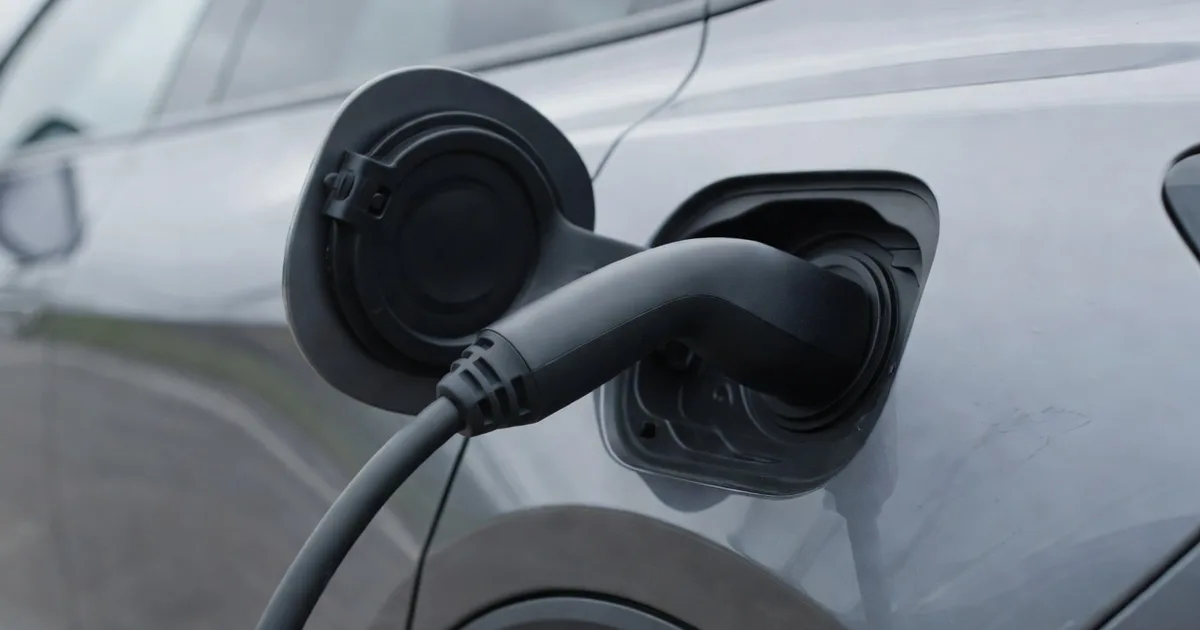
A charging cable arcing from an unbranded blank fast charger to the side of an electric car
Real-world range
295 mi
Usable battery
91.0 kWhFord — 2026 Mustang Mach-E specifications · 2026-09
10-80% charge
32 minFord — 2026 Mustang Mach-E specifications · 2026-09
Battery safety score
6.5/10How this is calculated

The Mach-E’s headline is 320 miles of EPA range, which sounds excellent until you notice it takes 91 kWh of usable battery to get there. At 31 kWh per 100 miles it is materially less efficient than the Tesla Model Y, which manages 327 EPA miles from 75 kWh.

Why efficiency is not just an environmental point

A bigger battery costs more to buy, more to insure, more to replace out of warranty and more to charge for the same distance. Enter both cars into the running-cost calculator at the same mileage and the gap in annual energy cost is real money, not a rounding error — and it compounds every year you own the car.

One car, two packs: read the market labels

Ford sells two different Extended Range packs under this name. The North American car carries 91 kWh usable and is rated at 320 miles by the EPA. The European car carries 88 kWh and is rated at 615 km WLTP. They are not the same specification, and converting one figure into the other would produce a number that describes neither car.

So the source note under every figure in the table below names the market it came from. The EPA range, the NHTSA rating and the recall record are the North American car; the WLTP range, the observed real-world figure, the consumption, the power, the torque and the European prices are from EV Database’s listing of the European car. Check the credit line before comparing a number here against one you read somewhere else.

The NACS change

From 2026 the Mach-E ships with a native NACS port rather than CCS with an adapter. For a US buyer this is arguably the most consequential change of the model year: it turns the largest and most reliable fast-charging network in the country into a first-class option rather than a workaround.

Roughly thirty-two minutes from 10 to 80 percent is mid-table, and the 10.5 kW onboard charger is slightly better than the 11 kW class norm suggests once you account for how US home circuits are wired.

Charging time and running cost for the Ford Mustang Mach-E Extended Range RWD are worked out in full on its own page. It works the numbers through at every charger power, with the tariff and efficiency assumptions printed rather than assumed: Ford Mustang Mach-E charging time and cost.

Frequently asked questions

How far does the Ford Mustang Mach-E Extended Range RWD really go on a charge?

The Ford Mustang Mach-E Extended Range RWD covers about 475 km in independently observed mixed driving, 615 km on the WLTP cycle, 320 miles on the EPA cycle. That observed figure is about 77 per cent of the WLTP claim — a shortfall is normal for every electric car, and what matters is that this one is predictable rather than that it exists. We rank the size of that gap across the database on claimed vs real range.

How long does the Ford Mustang Mach-E Extended Range RWD take to charge?

From 10 to 80 per cent on a DC rapid charger it takes about 32 minutes, peaking at 150 kW. That is at the slower end of the 18 cars we hold charging data for — worth weighing if you drive long distances often. On AC at home it accepts up to 10.5 kW. The peak figure on its own tells you very little — this ranking explains why the window is the honest measure.

How long will the Ford Mustang Mach-E Extended Range RWD’s battery last?

The battery is warranted for 8 years or 100,000 miles, with replacement if capacity falls below 70 per cent. Our projection puts it at roughly 78.4 per cent of original capacity after eight years. That is an estimate, not a measurement: nobody publishes per-model degradation data, so it applies the published rate for this vehicle class and is labelled as an estimate everywhere it appears. The reasoning is set out in full on the methodology page, and we compare warranty terms across the database on best EV battery warranties.

Who should buy the Ford Mustang Mach-E Extended Range RWD?

On our data it is one of the biggest batteries in the database at 91 kWh usable. Against that, it is one of the slower cars to rapid charge at 32 minutes. Whether that suits you depends on how much of your charging happens at home and how often you drive beyond one charge — the running cost calculator takes your own mileage and tariff, and the comparison tool puts this car next to any other in the database.

Full specifications

Market & identity

Where the car is actually sold. Fields left empty for a market render as "not sold here", never as zero.

Model year2026
Body stylesuv
Seats5
Curb weight4,764 lb
Sold in the USYes
Sold in the EU/UKYes

Battery

Pack chemistry and construction. Usable capacity, not gross, is what the car can actually deliver.

Cell chemistryLFP tolerates daily charging to 100% and is the most thermally stable; NMC and NCA pack more energy per kilogram.NMC
Pack architecture400 V
Usable capacityThe figure every range and cost calculation on this site is based on.91.0 kWhFord — 2026 Mustang Mach-E specifications · 2026-09
Thermal managementActive liquid or direct-refrigerant cooling is the strongest single predictor of slow degradation and repeatable fast charging.liquid-active
Pack voltage800 V architectures hold high charging power for longer and waste less energy as heat.400 VEV Database — Ford Mustang Mach-E ER RWD (MY25), battery architecture listed as 400 V · 2026-09
Capacity loss per yearRate for this vehicle class from published fleet datasets, not a measurement of this model and not a manufacturer claim.2.7% / year estGeotab EV battery degradation study, 2025 — SUV and MPV class rate, not a measurement of this model · 2026-09
Projected state of health at 8 yearsModelled from the observed degradation rate at average annual mileage. An estimate, not a measurement.78% estStraight-line projection from the class rate above; method published at /methodology/ · 2026-09

Range & efficiency

EPA, WLTP and CLTC are different tests, not different opinions about one number. They sit side by side here and are never converted into one another.

EPA rangeUS EPA combined cycle, the most conservative of the three official tests.320 miEPA fueleconomy.gov — 2026 Ford Mustang Mach-E RWD Extended · 2026-09
EPA range, cityThe city half of the EPA combined rating. Usually the higher of the two for an electric car.335 miEPA fueleconomy.gov – 2026 Ford Mustang Mach-E RWD Extended, certification record 50205 · 2026-09
EPA range, highwayThe highway half of the EPA combined rating, and the figure to plan a long drive around.302 miEPA fueleconomy.gov – 2026 Ford Mustang Mach-E RWD Extended, certification record 50205 · 2026-09
EPA consumption, city29.2 kWh/100 miEPA fueleconomy.gov – 2026 Ford Mustang Mach-E RWD Extended, certification record 50205 · 2026-09
EPA consumption, highway32.4 kWh/100 miEPA fueleconomy.gov – 2026 Ford Mustang Mach-E RWD Extended, certification record 50205 · 2026-09
WLTP rangeEuropean combined cycle, typically 15 to 25 percent more optimistic than EPA for the same car.382 mi
Observed real-world rangeMixed-conditions figure from independent testing. This is the number that matters on a road trip.295 mi
EPA consumption30.7 kWh/100 miEPA fueleconomy.gov — 2026 Ford Mustang Mach-E RWD Extended · 2026-09
Real-world consumption298 Wh/miEV Database — Ford Mustang Mach-E ER RWD, EVDB Real Range vehicle consumption (185 Wh/km) · 2026-09

Charging

Peak power is a marketing number. The 10 to 80 percent time and the shape of the curve are what you actually wait through.

Peak DC powerHeld briefly, often only inside a narrow state-of-charge window.150 kW
10 to 80 percent DC charge timeThe honest measure of fast-charging speed.32 minFord — 2026 Mustang Mach-E specifications · 2026-09
AC onboard chargerSets how fast the car fills up overnight at home.11 kWFord — 2026 Mustang Mach-E specifications · 2026-09
DC connector (US)The plug fitted to the car as sold in the United States. Blank where we have not sourced it for that market.NACSFord — 2026 Mustang Mach-E specifications, native NACS port · 2026-09

Performance

Acceleration is quoted per market: manufacturers publish 0-60 mph in the US and 0-100 km/h in Europe, measured differently.

Peak power203 kW
Peak torque387 lb-ft
0-100 km/h6.1 s
Top speed112 mph

Cost of ownership

Prices are sourced separately per market. A US price and a European price are two different market prices, not one price at an exchange rate, so this site never converts between them.

Base price (EU)€55,400
Base price (UK)£59,390
Est. out-of-warranty pack replacement (US)$15,000 estEV Model Compare estimate — formula on the methodology page · 2026-09
Est. out-of-warranty pack replacement (EU)€13,700 estEV Model Compare estimate — formula on the methodology page · 2026-09
Battery warranty8 yr2025 Model Year Battery Electric Vehicle Warranty Guide (E-Transit, Mustang Mach-E, F-150 Lightning) (US, MY2025) · 2026-09
Battery warranty distance (US)100,000 mi2025 Model Year Battery Electric Vehicle Warranty Guide (E-Transit, Mustang Mach-E, F-150 Lightning) (US, MY2025) · 2026-09
Warranty capacity floorThe state of health below which the manufacturer replaces the pack under warranty. Usually 70 percent.70%2025 Model Year Battery Electric Vehicle Warranty Guide (E-Transit, Mustang Mach-E, F-150 Lightning) (US, MY2025) · 2026-09

Safety & risk

Crash ratings come from the testing bodies. The battery safety score is our own composite and its formula is published on the methodology page.

NHTSA overall rating5/5NHTSA 5-Star Safety Ratings — 2026 FORD MUSTANG MACH-E BEV SUV BEV RWD · 2026-09
Battery or high-voltage recalls5NHTSA recall database — battery, electrical and powertrain campaigns only, last four model years · 2026-09
Recall history notes26V582000 (electrical system:propulsion system:traction battery:management system/energy control module (bms/becm):software): The battery energy control module software may cause an incorrect state of charge to display in the vehicle, or lead to an increased risk of a high voltage battery fire after repeated DC… | 26V417000 (power train:driveline:differential unit): The rear differential pinion shaft may fracture. | 25V863000 (power train:automatic transmission:internal:park pawl): The integrated park module may fail to lock into the park position when the driver shifts into park. As such, these vehicles fail to comply with the requirements of Federal Motor Vehicle…

Projected battery capacity

Projected straight-line from 2.7% a year — the published rate for this vehicle class, not a measurement of this car. Nobody releases per-model degradation data: the one fleet dataset large enough to matter anonymises the models. Capacity loss is driven as much by calendar age as by mileage, which is why it is reported per year rather than per kilometre. Real packs vary with climate, how long the car sits at a high state of charge, and how much of its charging is done at high-power DC.

100% 90% 80% 70% 60% warranty floor 70% new yr 4 89.2% yr 8 78.4%

The battery warranty replaces the pack below 70% capacity. This projection reaches 78.4% at eight years.

Where these numbers come from