Skip to content

Volvo EX30 Single Motor Extended Range

At 1,850 kg it is within three kilos of the lightest car here, and at £37,260 among the cheapest. It gives up range and charging speed for that, but staying under two tonnes in a class where two tonnes is normal is worth something on its own.

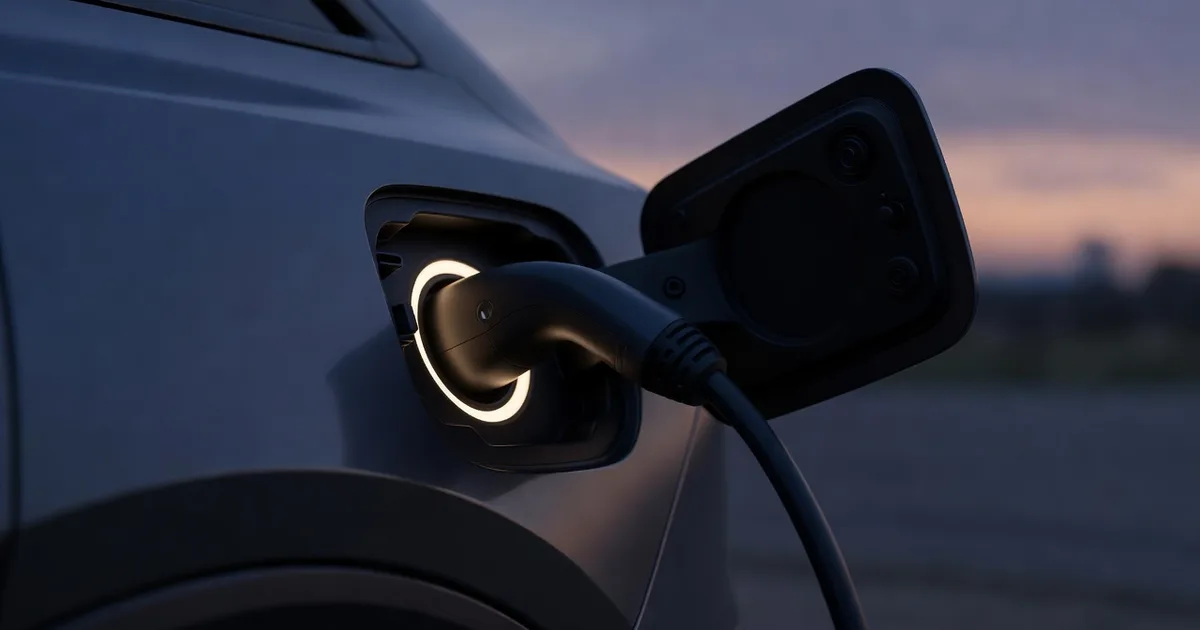
Close-up of an electric car charging port lid open with a soft glowing light ring
Real-world range
227 mi
Usable battery
65.0 kWh
10-80% charge
28 min
Battery safety score
7.8/10How this is calculated

At 1,850 kg the EX30 is the second-lightest car on this site — three kilograms behind the rear-drive Model 3, and 49 kg lighter than anything else here — and weight is the quiet variable behind almost everything else: tyre wear, braking, road damage, and the amount of energy it takes to move the thing at all.

What you give up

365 km of observed real-world range is the shortest here, and 178 Wh/km is mid-table rather than impressive — a small SUV shape is not aerodynamically kind. 158 kW peak and twenty-eight minutes from 10 to 80 percent is ordinary. For a car that will spend most of its life doing school runs and commutes on home charging, none of that matters much. For regular long-distance driving it does.

The value case

€44,990 makes it around €9,000 cheaper than the ID.7 or the Seal and less than half a Taycan. Run it through the running-cost calculator with a realistic home-charging share and the purchase-price gap to the rest of this group turns out to be difficult to recover on fuel savings alone — which is an argument for buying the cheaper car, not the more efficient one.

Charging time and running cost for the Volvo EX30 Single Motor Extended Range are worked out in full on its own page. It works the numbers through at every charger power, with the tariff and efficiency assumptions printed rather than assumed: Volvo EX30 charging time and cost.

Frequently asked questions

How far does the Volvo EX30 Single Motor Extended Range really go on a charge?

The Volvo EX30 Single Motor Extended Range covers about 365 km in independently observed mixed driving, 476 km on the WLTP cycle, 261 miles on the EPA cycle. That observed figure is about 77 per cent of the WLTP claim — a shortfall is normal for every electric car, and what matters is that this one is predictable rather than that it exists. We rank the size of that gap across the database on claimed vs real range.

How long does the Volvo EX30 Single Motor Extended Range take to charge?

From 10 to 80 per cent on a DC rapid charger it takes about 28 minutes, peaking at 158 kW. That puts it mid-pack among the 18 cars we hold charging data for. On AC at home it accepts up to 11 kW. The peak figure on its own tells you very little — this ranking explains why the window is the honest measure.

How long will the Volvo EX30 Single Motor Extended Range’s battery last?

The battery is warranted for 8 years or 100,000 miles, with replacement if capacity falls below 70 per cent. Our projection puts it at roughly 78.4 per cent of original capacity after eight years. That is an estimate, not a measurement: nobody publishes per-model degradation data, so it applies the published rate for this vehicle class and is labelled as an estimate everywhere it appears. The reasoning is set out in full on the methodology page, and we compare warranty terms across the database on best EV battery warranties.

Who should buy the Volvo EX30 Single Motor Extended Range?

On our data it is able to power household appliances from the pack at 3 kW. Whether that suits you depends on how much of your charging happens at home and how often you drive beyond one charge — the running cost calculator takes your own mileage and tariff, and the comparison tool puts this car next to any other in the database.

Full specifications

Market & identity

Where the car is actually sold. Fields left empty for a market render as "not sold here", never as zero.

Model year2026
Body stylesuv
Seats5
Curb weight4,079 lb
Sold in the USYes
Sold in the EU/UKYes

Battery

Pack chemistry and construction. Usable capacity, not gross, is what the car can actually deliver.

Cell chemistryLFP tolerates daily charging to 100% and is the most thermally stable; NMC and NCA pack more energy per kilogram.NMC
Pack architecture400 VEV Database — Volvo EX30 Single Motor ER (MY24-26) · 2026-09
Gross capacity69.0 kWh
Usable capacityThe figure every range and cost calculation on this site is based on.65.0 kWh
Thermal managementActive liquid or direct-refrigerant cooling is the strongest single predictor of slow degradation and repeatable fast charging.liquid-active
Pack voltage800 V architectures hold high charging power for longer and waste less energy as heat.392 VEV Database — Volvo EX30 Single Motor ER (MY24-26) · 2026-09
Capacity loss per yearRate for this vehicle class from published fleet datasets, not a measurement of this model and not a manufacturer claim.2.7% / year estGeotab EV battery degradation study, 2025 — SUV and MPV class rate, not a measurement of this model · 2026-09
Projected state of health at 8 yearsModelled from the observed degradation rate at average annual mileage. An estimate, not a measurement.78% estStraight-line projection from the class rate above; method published at /methodology/ · 2026-09

Range & efficiency

EPA, WLTP and CLTC are different tests, not different opinions about one number. They sit side by side here and are never converted into one another.

EPA rangeUS EPA combined cycle, the most conservative of the three official tests.261 miEPA fueleconomy.gov — 2026 Volvo EX30 Single motor extended range · 2026-09
EPA range, cityThe city half of the EPA combined rating. Usually the higher of the two for an electric car.284 miEPA fueleconomy.gov – 2026 Volvo EX30 Single motor extended range, certification record 49989 · 2026-09
EPA range, highwayThe highway half of the EPA combined rating, and the figure to plan a long drive around.233 miEPA fueleconomy.gov – 2026 Volvo EX30 Single motor extended range, certification record 49989 · 2026-09
EPA consumption, city26.6 kWh/100 miEPA fueleconomy.gov – 2026 Volvo EX30 Single motor extended range, certification record 49989 · 2026-09
EPA consumption, highway32.3 kWh/100 miEPA fueleconomy.gov – 2026 Volvo EX30 Single motor extended range, certification record 49989 · 2026-09
WLTP rangeEuropean combined cycle, typically 15 to 25 percent more optimistic than EPA for the same car.296 mi
Observed real-world rangeMixed-conditions figure from independent testing. This is the number that matters on a road trip.227 mi
EPA consumption29.2 kWh/100 miEPA fueleconomy.gov — 2026 Volvo EX30 Single motor extended range · 2026-09
Real-world consumption286 Wh/mi

Charging

Peak power is a marketing number. The 10 to 80 percent time and the shape of the curve are what you actually wait through.

Peak DC powerHeld briefly, often only inside a narrow state-of-charge window.158 kW
10 to 80 percent DC charge timeThe honest measure of fast-charging speed.28 min
AC onboard chargerSets how fast the car fills up overnight at home.11 kW
DC connector (Europe)CCS2
DC connector (US)The plug fitted to the car as sold in the United States. Blank where we have not sourced it for that market.CCS1Volvo Car USA – Supercharger access for compatible Volvo electric cars is through the NACS Fast Charging Adapter rather than a native port · 2026-09
Vehicle-to-load output3 kWEV Database — Volvo EX30 Single Motor ER (MY24-26) · 2026-09

Performance

Acceleration is quoted per market: manufacturers publish 0-60 mph in the US and 0-100 km/h in Europe, measured differently.

Peak power200 kWEV Database — Volvo EX30 Single Motor ER (MY24-26) · 2026-09
Peak torque253 lb-ftEV Database — Volvo EX30 Single Motor ER (MY24-26) · 2026-09
0-100 km/h5.3 s
Top speed112 mph

Cost of ownership

Prices are sourced separately per market. A US price and a European price are two different market prices, not one price at an exchange rate, so this site never converts between them.

Base price (EU)€44,990
Base price (UK)£37,260
Est. out-of-warranty pack replacement (US)$10,700 estEV Model Compare estimate — formula on the methodology page · 2026-09
Est. out-of-warranty pack replacement (EU)€9,800 estEV Model Compare estimate — formula on the methodology page · 2026-09
Battery warranty8 yrVolvo Car USA — 2026 Fully Electric Models Warranty and Maintenance Records Information (US, MY2026) · 2026-09
Battery warranty distance (US)100,000 miVolvo Car USA — 2026 Fully Electric Models Warranty and Maintenance Records Information (US, MY2026) · 2026-09
Warranty capacity floorThe state of health below which the manufacturer replaces the pack under warranty. Usually 70 percent.70%Volvo Car USA — 2026 Fully Electric Models Warranty and Maintenance Records Information (US, MY2026) · 2026-09

Safety & risk

Crash ratings come from the testing bodies. The battery safety score is our own composite and its formula is published on the methodology page.

Euro NCAP overall rating5/5Euro NCAP published rating · 2026-09
Euro NCAP test yearRatings are only comparable within the same protocol year.2023Euro NCAP published rating · 2026-09
Battery or high-voltage recalls2NHTSA recall database — battery, electrical and powertrain campaigns only, last four model years · 2026-09
Recall history notes26V103000 (electrical system:propulsion system:traction battery): The high voltage battery may experience a short circuit and overheat. | 26V001000 (electrical system:propulsion system:traction battery): The high-voltage battery may experience a short circuit and overheat.

Projected battery capacity

Projected straight-line from 2.7% a year — the published rate for this vehicle class, not a measurement of this car. Nobody releases per-model degradation data: the one fleet dataset large enough to matter anonymises the models. Capacity loss is driven as much by calendar age as by mileage, which is why it is reported per year rather than per kilometre. Real packs vary with climate, how long the car sits at a high state of charge, and how much of its charging is done at high-power DC.

100% 90% 80% 70% 60% warranty floor 70% new yr 4 89.2% yr 8 78.4%

The battery warranty replaces the pack below 70% capacity. This projection reaches 78.4% at eight years.

Where these numbers come from