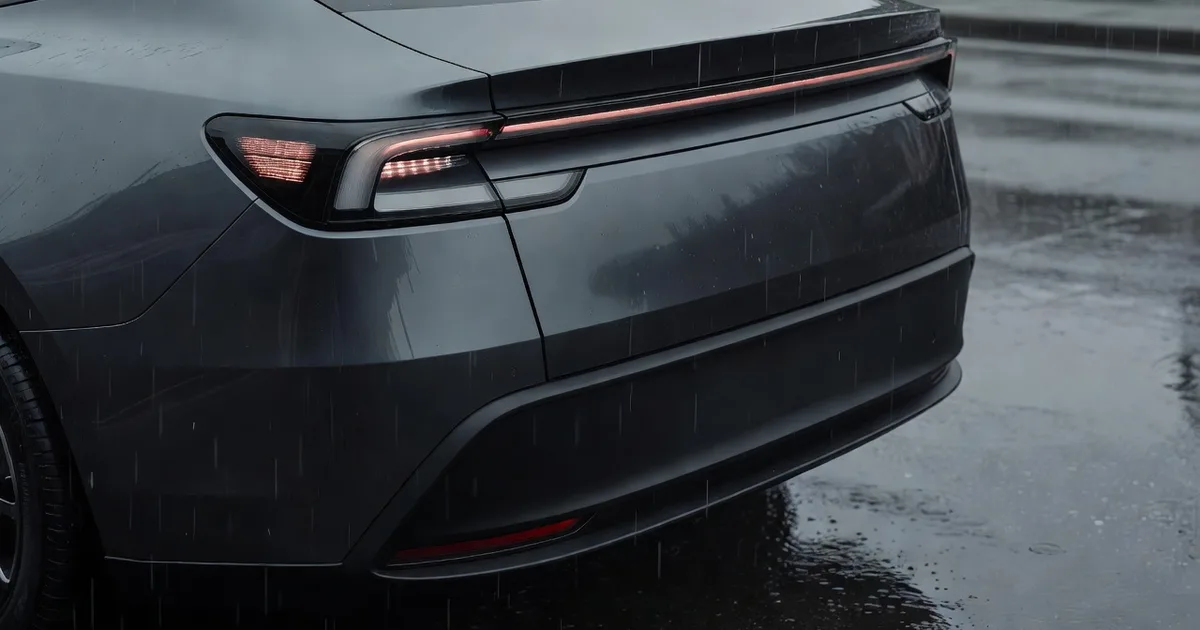
The Ioniq 6 is the clearest demonstration on this site that battery size is the wrong thing to shop for. Its 74 kWh usable pack is one of the smaller ones here, and it still delivers 495 km of observed real-world range — more than the Kia EV9 manages from 96 kWh. The difference is aerodynamics and drivetrain efficiency, not capacity.
Why 800 volts matters here
Seventeen minutes from 10 to 80 percent is the number that changes how the car fits into a long journey. Higher pack voltage means lower current for the same power, which means less heat, which means the car can hold near-peak charging power across a much wider state-of-charge window instead of tapering almost immediately. The peak figure of 233 kW is less interesting than the fact that it is sustained.
The practical consequence: on a long drive the Ioniq 6 is quicker door to door than cars with more range but slower charging, because it spends less time stopped.
The trade-offs
That aerodynamic shape costs rear headroom and boot access, and the car is a saloon in a market that mostly wants SUVs. Hyundai’s ten-year battery warranty in the US is the longest of any high-volume brand, which matters more than it sounds: it covers the period in which capacity loss actually becomes noticeable.
Charging time and running cost for the Hyundai Ioniq 6 Long Range RWD are worked out in full on its own page. It works the numbers through at every charger power, with the tariff and efficiency assumptions printed rather than assumed: Hyundai Ioniq 6 charging time and cost.
Frequently asked questions
How far does the Hyundai Ioniq 6 Long Range RWD really go on a charge?
The Hyundai Ioniq 6 Long Range RWD covers about 495 km in independently observed mixed driving, 614 km on the WLTP cycle, 342 miles on the EPA cycle. That observed figure is about 81 per cent of the WLTP claim — a shortfall is normal for every electric car, and what matters is that this one is predictable rather than that it exists. We rank the size of that gap across the database on claimed vs real range.
How long does the Hyundai Ioniq 6 Long Range RWD take to charge?
From 10 to 80 per cent on a DC rapid charger it takes about 17 minutes, peaking at 233 kW. That is among the quickest of the 18 cars we hold charging data for. On AC at home it accepts up to 11 kW. The peak figure on its own tells you very little — this ranking explains why the window is the honest measure.
How long will the Hyundai Ioniq 6 Long Range RWD’s battery last?
The battery is warranted for 10 years or 100,000 miles, with replacement if capacity falls below 70 per cent. Our projection puts it at roughly 84 per cent of original capacity after eight years. That is an estimate, not a measurement: nobody publishes per-model degradation data, so it applies the published rate for this vehicle class and is labelled as an estimate everywhere it appears. The reasoning is set out in full on the methodology page, and we compare warranty terms across the database on best EV battery warranties.
Who should buy the Hyundai Ioniq 6 Long Range RWD?
On our data it is one of the most efficient cars here at 149 Wh/km, which is what keeps the running cost down; among the fastest to rapid charge at 17 minutes for 10-80 per cent; among the longest-legged at about 495 km observed. Whether that suits you depends on how much of your charging happens at home and how often you drive beyond one charge — the running cost calculator takes your own mileage and tariff, and the comparison tool puts this car next to any other in the database.