Skip to content

Kia EV9 99.8 kWh AWD

A genuine seven-seater that charges in twenty-two minutes, which almost nothing else its size manages. You pay for that in efficiency: 221 Wh/km is the worst figure in this comparison.

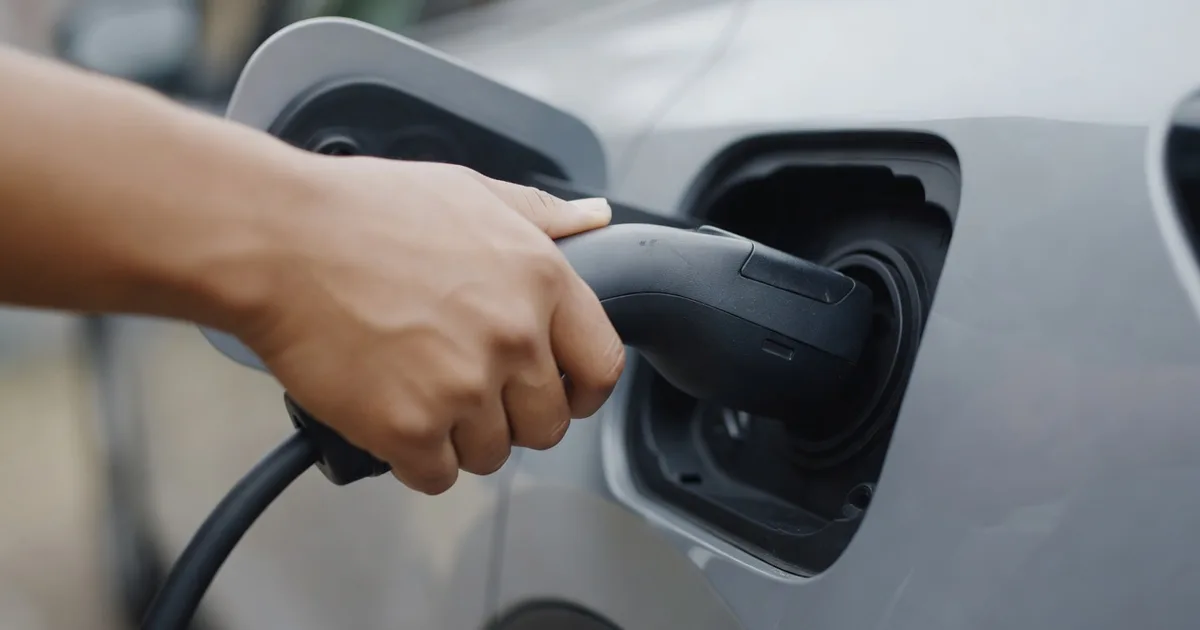
Close-up of a hand inserting a charging connector into an electric car charging port
Estimated real-world range
270 mi est
Usable battery
96.0 kWh
10-80% charge
22 min
Battery safety score
6.5/10How this is calculated

Range-data clarification: EV Database Real Range and real-world consumption figures on this page are estimates, not road tests performed by this site. EPA and WLTP ratings use different procedures and may refer to different market versions. Check the exact model and linked source; no figure guarantees range on a particular trip.

The EV9 exists because seven-seat electric cars barely did. It is nearly 2.7 tonnes and shaped like a wardrobe, and both of those facts show up in the efficiency figure: 221 Wh/km, the highest here by a wide margin. That is the price of the packaging, and it is worth being clear-eyed about it.

Big battery, ordinary range

96 kWh usable is by far the largest pack in this group, and it produces 435 km of real-world range — less than the Hyundai Ioniq 6 gets from 74 kWh. That comparison is the single most useful thing on this page: capacity buys you range only in proportion to how efficiently the car uses it.

Where it wins

The 800-volt architecture it shares with the Ioniq 6 means that big pack refills in twenty-two minutes. For a family car doing long holiday drives fully loaded, that combination — three usable rows plus a genuinely fast charge — is rare enough to be the deciding factor. Kia’s ten-year battery warranty in the US is the same class-leading term Hyundai offers.

The running-cost calculator is worth using carefully with this car. At 221 Wh/km on public rapid charging, the energy cost per kilometre approaches that of an efficient petrol SUV.

Charging time and running cost for the Kia EV9 99.8 kWh AWD are worked out in full on its own page. It works the numbers through at every charger power, with the tariff and efficiency assumptions printed rather than assumed: Kia EV9 99.8 kWh AWD charging time and cost.

Frequently asked questions

How far does the Kia EV9 99.8 kWh AWD really go on a charge?

The Kia EV9 99.8 kWh AWD covers about 435 km in the source’s mixed-driving estimate, 521 km on the WLTP cycle, 283 miles on the EPA cycle. That estimated figure is about 83 per cent of the WLTP claim — a shortfall is normal for every electric car, and the estimate is not a guaranteed or repeatable result for a particular trip. We rank the size of that gap across the database on claimed vs real range.

How long does the Kia EV9 99.8 kWh AWD take to charge?

From 10 to 80 per cent on a DC rapid charger it takes about 22 minutes, peaking at 209 kW. That puts it mid-pack among the 18 cars we hold charging data for. On AC at home it accepts up to 11 kW. The peak figure on its own tells you very little — this ranking explains why the window is the honest measure.

How long will the Kia EV9 99.8 kWh AWD’s battery last?

The battery is warranted for 10 years or 100,000 miles, with replacement if capacity falls below 70 per cent. Our projection puts it at roughly 78.4 per cent of original capacity after eight years. That is an estimate, not a measurement: nobody publishes per-model degradation data, so it applies the published rate for this vehicle class and is labelled as an estimate everywhere it appears. The reasoning is set out in full on the methodology page, and we compare warranty terms across the database on best EV battery warranties.

Who should buy the Kia EV9 99.8 kWh AWD?

On our data it is one of the biggest batteries in the database at 96 kWh usable; able to power household appliances from the pack at 3.6 kW. Against that, it is one of the thirstier cars here at 221 Wh/km. Whether that suits you depends on how much of your charging happens at home and how often you drive beyond one charge — the running cost calculator takes your own mileage and tariff, and the comparison tool puts this car next to any other in the database.

Full specifications

Market & identity

Model year2026
Body stylesuv
Seats7
Curb weight5,787 lb
Sold in the USYes
Sold in the EU/UKYes

Battery

Cell chemistryNMC
Pack architecture800 V, pouch cells, 152s3p
Gross capacity99.8 kWh
Usable capacity96.0 kWh
Thermal managementliquid-active
Pack voltage552 V
Capacity loss per yearRate for this vehicle class from published fleet datasets, not a measurement of this model and not a manufacturer claim.2.7% / year estGeotab EV battery degradation study, 2025 — SUV and MPV class rate, not a measurement of this model · 2026-09
Projected state of health at 8 yearsModelled from the observed degradation rate at average annual mileage. An estimate, not a measurement.78% estStraight-line projection from the class rate above; method published at /methodology/ · 2026-09

Range & efficiency

EPA range283 miEPA fueleconomy.gov — 2026 Kia EV9 Long Range AWD · 2026-09
EPA range, city311 miEPA fueleconomy.gov – 2026 Kia EV9 Long Range AWD, certification record 49667 · 2026-09
EPA range, highway249 miEPA fueleconomy.gov – 2026 Kia EV9 Long Range AWD, certification record 49667 · 2026-09
EPA consumption, city36.0 kWh/100 miEPA fueleconomy.gov – 2026 Kia EV9 Long Range AWD, certification record 49667 · 2026-09
EPA consumption, highway45.0 kWh/100 miEPA fueleconomy.gov – 2026 Kia EV9 Long Range AWD, certification record 49667 · 2026-09
WLTP range324 mi
Estimated real-world rangeEV Database Real Range estimate, credited to the exact model record. This is not an independent road-test measurement or a guaranteed driving distance.270 mi est
EPA consumption40.0 kWh/100 miEPA fueleconomy.gov — 2026 Kia EV9 Long Range AWD · 2026-09
Real-world consumption356 Wh/mi

Charging

Peak DC power209 kW
10 to 80 percent DC charge time22 min
AC onboard charger11 kW
DC connector (Europe)CCS2
DC connector (US)NACSKia America press release, 24 April 2025 – "2025 model year Kia EV6 and 2026 model year EV9 come standard with NACS charging ports" · 2026-09
Vehicle-to-load output4 kW

Performance

Peak power283 kW
Peak torque443 lb-ft
0-100 km/h6.0 s
Top speed124 mph

Cost of ownership

Base MSRP (US)$63,900Kia USA — 2026 EV9 model page, Wind AWD (99.8 kWh, 283-mile EPA range) starting MSRP, excludes destination · 2026-09
Base price (EU)€68,990
Est. out-of-warranty pack replacement (US)$15,800 estEV Model Compare estimate — formula on the methodology page · 2026-09
Est. out-of-warranty pack replacement (EU)€14,400 estEV Model Compare estimate — formula on the methodology page · 2026-09
Battery warranty10 yrKia Warranty (Kia USA) (US) · 2026-09
Battery warranty distance (US)100,000 miKia Warranty (Kia USA) (US) · 2026-09
Warranty capacity floor70%Kia Warranty (Kia USA) (US) · 2026-09

Safety & risk

NHTSA overall rating5/5NHTSA 5-Star Safety Ratings — 2026 KIA EV9 SUV BEV AWD · 2026-09
Battery or high-voltage recalls6NHTSA recall database — battery, electrical and powertrain campaigns only, last four model years · 2026-09
Recall history notes26V431000 (electrical system:propulsion system:traction battery): (Kia) is recalling certain 2022-2024 EV6 and 2024 EV9 vehicles. The high voltage battery cells may contain misaligned electrodes, which can lead to a fire while parked or driving. | 26V046000 (electrical system: instrument cluster/panel): (Kia) is recalling certain 2025 Kia K4, 2025-2026 Sorento, Sorento Hybrid, Sorento Plug-In Hybrid Electric (PHEV), 2026 Sportage, Sportage Hybrid, Sportage PHEV, K5, EV9, Carnival, and… | 25V115000 (electrical system:propulsion system): (Kia) is recalling certain 2025 EV9 vehicles. The rear gear drive unit (GDU) motor shaft may have been improperly welded and become damaged, causing a loss of drive power.

Projected battery capacity

At 2.7% a year, a straight-line projection (not a measurement) leaves this pack at about 78.4% after eight years. That rate is lower than 11 of the 40 models with a projection in the database.

100% 90% 80% 70% 60% warranty floor 70% new yr 4 89.2% yr 8 78.4%

Warranty floor: 70% capacity; the projection ends at 78.4%.

Where these numbers come from