Skip to content

Ford Mustang Mach-E Standard Range RWD

The LFP Mach-E: 72.6 kWh usable, 380 km observed and a 32-minute 10-80 window. It is the standard-range car that Ford moved to lithium iron phosphate, which makes it the version to charge to 100 per cent — and, in the US, the cheaper Mach-E at 260 miles EPA.

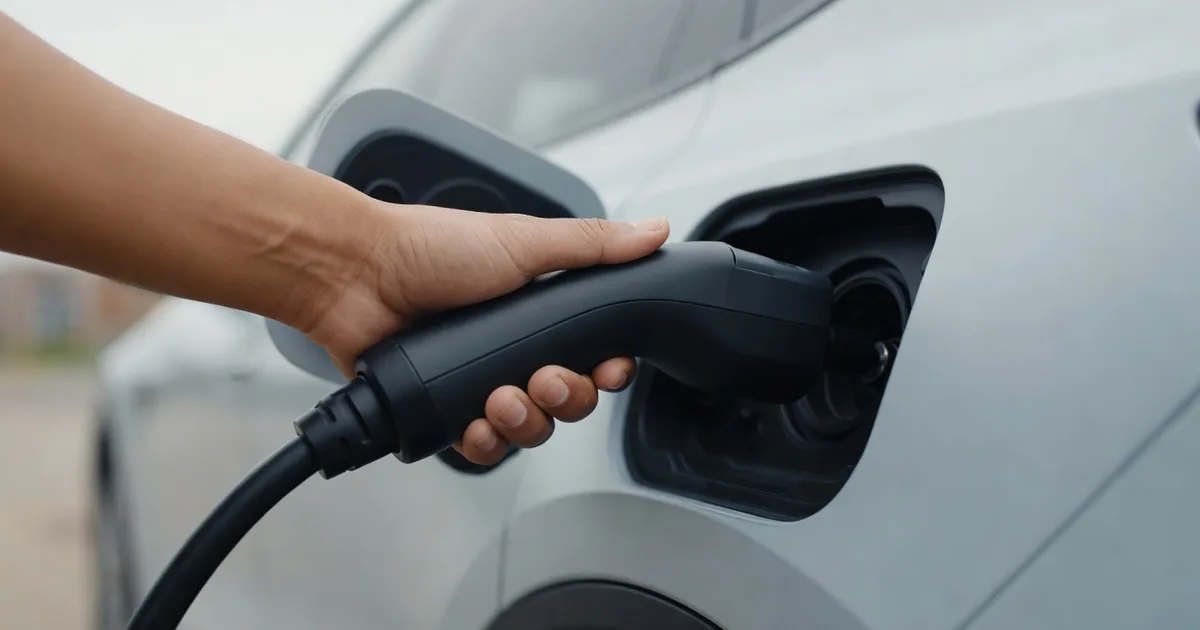
Close-up of a hand inserting a charging connector into an electric car charging port
Real-world range
236 mi
Usable battery
72.6 kWh
10-80% charge
32 min
Battery safety score
7.5/10How this is calculated

Ford moved the standard-range Mustang Mach-E to lithium iron phosphate cells, and that is the most important fact about this car: it is the Mach-E you charge to 100 per cent without a second thought, in exchange for a smaller pack. 72.6 kWh usable takes it 380 km in observed mixed driving, against the Extended Range’s 475 from 91 kWh.

The heaviest LFP car here

At 2,175 kg and 191 Wh/km observed, the Mach-E SR is the thirstiest of the four lithium iron phosphate cars in this database — the two rear-drive Teslas manage 133 and 158. Mass is most of the reason. The consequence is that its 72.6 kWh pack, a fifth larger than the Teslas’ 60, does not go further than the Model Y RWD on the road. The chemistry’s charging habit is the same, though: Ford, like Tesla, tells owners of this pack to charge it to full regularly. Every LFP car we hold is listed on electric cars with LFP batteries.

Charging: the same 150 kW ceiling, four minutes fewer

The DC peak is 150 kW, as on the Extended Range, and the 10 to 80 per cent window is 32 minutes. That the smaller pack does not charge much faster than the bigger one — the Extended Range takes 32 minutes too — says something about the curve: this platform holds a modest rate rather than a high peak that tapers. A 150 kW station is all it can use; anything faster is wasted on it, as it is on every 400-volt car in do you need a 350 kW charger.

At home the onboard charger is 11 kW — a little over seven hours from empty.

Two markets, two range figures

The European figures above come from EV Database; the US car is rated by the EPA at 260 miles, and that figure — not a conversion of the WLTP one — is what the US charging-cost figures on this site are built on. The two ratings are different tests of the same car, which is why they sit side by side here and are never averaged; the reasoning is in EPA against WLTP.

Charging time and running cost for the Ford Mustang Mach-E Standard Range RWD are worked out in full, beside the Extended Range’s, on the Mach-E charging page. It works out at 32 minutes on DC and about $5.78 per 100 miles at the US average rate, with the tariff and efficiency assumptions printed rather than assumed: Ford Mustang Mach-E charging time and cost.

Frequently asked questions

How far does the Mustang Mach-E Standard Range really go?

About 380 km in observed mixed driving in Europe, against 470 km WLTP. In the United States the EPA rates it at 260 miles.

Is the standard-range Mach-E battery LFP?

Yes — Ford moved the standard-range pack to lithium iron phosphate. It holds 72.6 kWh usable and is the Mach-E version that can be charged to 100 per cent routinely. The Extended Range keeps a nickel-based pack.

How long does the Mach-E Standard Range take to charge?

About 32 minutes from 10 to 80 per cent on a 150 kW or faster DC station, and a little over seven hours from empty on an 11 kW home wallbox.

Standard Range or Extended Range Mach-E?

The Extended Range goes about 95 km further on a charge in Europe and 60 miles further in the US, and charges in the same 32 minutes. The Standard Range is about £8,500 cheaper in the UK and its LFP pack tolerates daily full charges. If you charge at home and rarely exceed 300 km between stops, the smaller pack costs you little; if you road-trip, the Extended Range’s margin is real. The two are side by side in Mach-E Standard Range vs Extended Range.

Full specifications

Market & identity

Where the car is actually sold. Fields left empty for a market render as "not sold here", never as zero.

Model year2026
Body stylesuv
Seats5
Curb weight4,795 lb
Sold in the USYes
Sold in the EU/UKYes

Battery

Pack chemistry and construction. Usable capacity, not gross, is what the car can actually deliver.

Cell chemistryLFP tolerates daily charging to 100% and is the most thermally stable; NMC and NCA pack more energy per kilogram.LFP
Pack architecture400 V
Gross capacity78.0 kWh
Usable capacityThe figure every range and cost calculation on this site is based on.72.6 kWh
Thermal managementActive liquid or direct-refrigerant cooling is the strongest single predictor of slow degradation and repeatable fast charging.liquid-active
Capacity loss per yearRate for this vehicle class from published fleet datasets, not a measurement of this model and not a manufacturer claim.2.7% / year estGeotab EV battery degradation study, 2025 — SUV and MPV class rate, not a measurement of this model · 2026-09
Projected state of health at 8 yearsModelled from the observed degradation rate at average annual mileage. An estimate, not a measurement.78% estStraight-line projection from the class rate above; method published at /methodology/ · 2026-09

Range & efficiency

EPA, WLTP and CLTC are different tests, not different opinions about one number. They sit side by side here and are never converted into one another.

EPA rangeUS EPA combined cycle, the most conservative of the three official tests.260 miEPA fueleconomy.gov — 2026 Ford Mustang Mach-E RWD · 2026-09
EPA range, cityThe city half of the EPA combined rating. Usually the higher of the two for an electric car.269 miEPA fueleconomy.gov – 2026 Ford Mustang Mach-E RWD, certification record 50204 · 2026-09
EPA range, highwayThe highway half of the EPA combined rating, and the figure to plan a long drive around.249 miEPA fueleconomy.gov – 2026 Ford Mustang Mach-E RWD, certification record 50204 · 2026-09
EPA consumption, city30.4 kWh/100 miEPA fueleconomy.gov – 2026 Ford Mustang Mach-E RWD, certification record 50204 · 2026-09
EPA consumption, highway32.8 kWh/100 miEPA fueleconomy.gov – 2026 Ford Mustang Mach-E RWD, certification record 50204 · 2026-09
WLTP rangeEuropean combined cycle, typically 15 to 25 percent more optimistic than EPA for the same car.292 mi
Observed real-world rangeMixed-conditions figure from independent testing. This is the number that matters on a road trip.236 mi
EPA consumption31.4 kWh/100 miEPA fueleconomy.gov — 2026 Ford Mustang Mach-E RWD · 2026-09
Real-world consumption307 Wh/mi

Charging

Peak power is a marketing number. The 10 to 80 percent time and the shape of the curve are what you actually wait through.

Peak DC powerHeld briefly, often only inside a narrow state-of-charge window.150 kW
10 to 80 percent DC charge timeThe honest measure of fast-charging speed.32 min
AC onboard chargerSets how fast the car fills up overnight at home.11 kW
DC connector (US)The plug fitted to the car as sold in the United States. Blank where we have not sourced it for that market.NACSFord — 2026 Mustang Mach-E specifications, native NACS port · 2026-09

Performance

Acceleration is quoted per market: manufacturers publish 0-60 mph in the US and 0-100 km/h in Europe, measured differently.

Peak power197 kW
Peak torque387 lb-ft
0-100 km/h6.2 s
Top speed112 mph

Cost of ownership

Prices are sourced separately per market. A US price and a European price are two different market prices, not one price at an exchange rate, so this site never converts between them.

Base price (EU)€56,500
Base price (UK)£50,840
Battery warranty8 yr2025 Model Year Battery Electric Vehicle Warranty Guide (E-Transit, Mustang Mach-E, F-150 Lightning) (US, MY2025) · 2026-09
Battery warranty distance (US)100,000 mi2025 Model Year Battery Electric Vehicle Warranty Guide (E-Transit, Mustang Mach-E, F-150 Lightning) (US, MY2025) · 2026-09
Warranty capacity floorThe state of health below which the manufacturer replaces the pack under warranty. Usually 70 percent.70%2025 Model Year Battery Electric Vehicle Warranty Guide (E-Transit, Mustang Mach-E, F-150 Lightning) (US, MY2025) · 2026-09

Safety & risk

Crash ratings come from the testing bodies. The battery safety score is our own composite and its formula is published on the methodology page.

NHTSA overall rating5/5NHTSA 5-Star Safety Ratings — 2026 FORD MUSTANG MACH-E BEV SUV BEV RWD · 2026-09
Battery or high-voltage recalls5NHTSA recall database — battery, electrical and powertrain campaigns only, last four model years · 2026-09
Recall history notes26V582000 (electrical system:propulsion system:traction battery:management system/energy control module (bms/becm):software): The battery energy control module software may cause an incorrect state of charge to display in the vehicle, or lead to an increased risk of a high voltage battery fire after repeated DC… | 26V417000 (power train:driveline:differential unit): The rear differential pinion shaft may fracture. | 25V863000 (power train:automatic transmission:internal:park pawl): The integrated park module may fail to lock into the park position when the driver shifts into park. As such, these vehicles fail to comply with the requirements of Federal Motor Vehicle…

Projected battery capacity

Projected straight-line from 2.7% a year — the published rate for this vehicle class, not a measurement of this car. Nobody releases per-model degradation data: the one fleet dataset large enough to matter anonymises the models. Capacity loss is driven as much by calendar age as by mileage, which is why it is reported per year rather than per kilometre. Real packs vary with climate, how long the car sits at a high state of charge, and how much of its charging is done at high-power DC.

100% 90% 80% 70% 60% warranty floor 70% new yr 4 89.2% yr 8 78.4%

The battery warranty replaces the pack below 70% capacity. This projection reaches 78.4% at eight years.

Where these numbers come from