Skip to content

Tesla Model 3 Long Range AWD

142 Wh/km, beaten only by its own rear-drive sibling, is what lets a 79 kWh pack outrun cars carrying ten kilowatt-hours more. It returns 555 km observed, the longest real-world range in this database, and that one figure explains most of what the Model 3 does well.

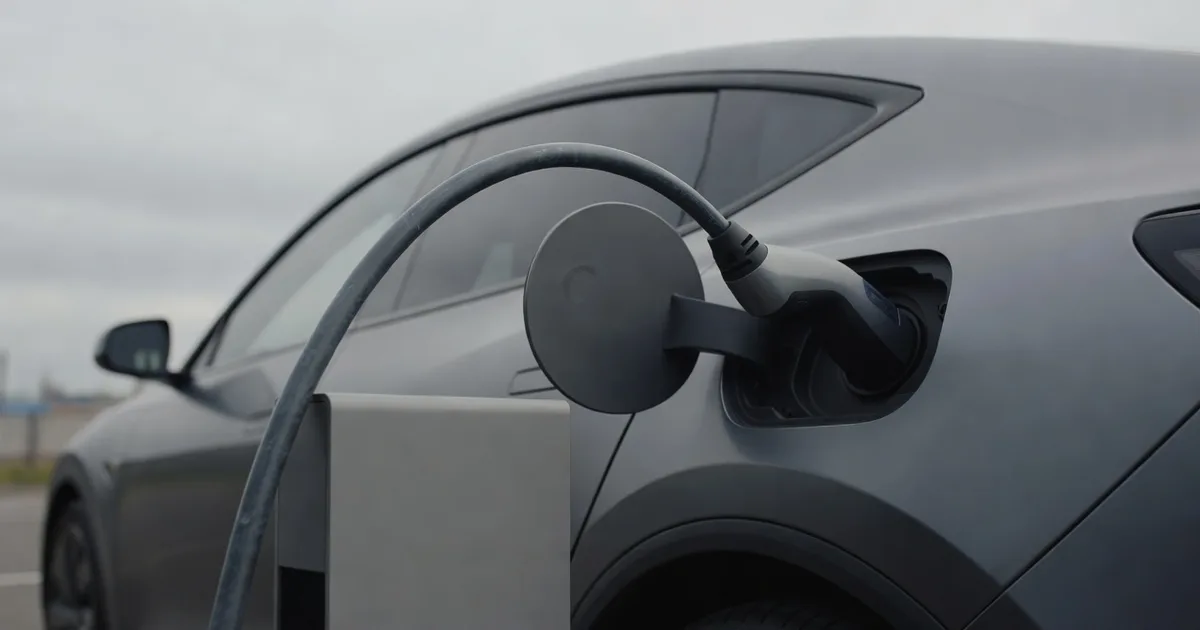
A charging cable arcing from an unbranded blank fast charger to the side of an electric car
Real-world range
345 mi
Usable battery
79.0 kWh
10-80% charge
28 min
Battery safety score
6.5/10How this is calculated

The Model 3 Long Range AWD returns 142 Wh/km, the second-lowest consumption in this database behind its own rear-drive sibling, and almost everything else about it follows from that number. It carries 79 kWh usable — less than the Kia EV9, less than the Nissan Ariya, less than the BYD Seal — and goes further than all of them.

Range: the claim and the reality

The WLTP figure is 716 km on the lower-rolling-resistance wheel and tyre package. Independent testing puts the mixed-conditions figure at around 555 km, which is about 78 percent of the official number — the same ratio the Model Y manages, and a better one than most of the field.

That gap is worth understanding rather than resenting. WLTP is a laboratory cycle with a low average speed and a mild ambient temperature. No car achieves it on a motorway in winter. What distinguishes a good car from a bad one is not whether it falls short of WLTP but by how much, and whether the shortfall is predictable.

Efficiency is the whole argument

142 Wh/km means the Model 3 needs roughly a fifth less energy per kilometre than the Nissan Ariya at 216 Wh/km. Over a year at 15,000 km that is about 1,100 kWh — real money at any tariff, and the reason the running-cost calculator separates them so clearly.

It also compounds. An efficient car needs a smaller pack for the same range, and a smaller pack is lighter, cheaper to build, cheaper to replace and quicker to charge to a given number of kilometres. Efficiency is the least glamorous specification on a car and the one that changes the most.

Charging: adequate, and increasingly ordinary

250 kW peak and 28 minutes from 10 to 80 percent was class-leading when this platform launched and is now mid-pack. The 800-volt Korean cars in this database — the Ioniq 5, the Ioniq 6, the EV6 — do the same job in seventeen or eighteen minutes on a 400 kW charger.

Where the Model 3 still holds an advantage is around the stop rather than during it: navigation that pre-conditions the pack on the way to a charger, and a network dense enough that you rarely queue. That is a real benefit and it does not show up in any row of the specification table.

What we do not know

The cells are NMC, but which NMC depends on where the car was built — the same problem described on our NMC reference page. A European Model 3 and a North American one with the same trim name can carry cells from different suppliers with different ageing behaviour.

The capacity-loss figure on this page is the published rate for the passenger-car class, not a measurement of this model. Nobody publishes per-model degradation data, and anyone who does is estimating. Ours is labelled as an estimate wherever it appears.

Charging time and running cost for the Tesla Model 3 Long Range AWD are worked out in full on its own page. It works the numbers through at every charger power, with the tariff and efficiency assumptions printed rather than assumed: Tesla Model 3 charging time and cost.

Frequently asked questions

How far does the Tesla Model 3 Long Range AWD really go on a charge?

The Tesla Model 3 Long Range AWD covers about 555 km in independently observed mixed driving, 716 km on the WLTP cycle, 346 miles on the EPA cycle. That observed figure is about 78 per cent of the WLTP claim — a shortfall is normal for every electric car, and what matters is that this one is predictable rather than that it exists. We rank the size of that gap across the database on claimed vs real range.

How long does the Tesla Model 3 Long Range AWD take to charge?

From 10 to 80 per cent on a DC rapid charger it takes about 28 minutes, peaking at 250 kW. That puts it mid-pack among the 18 cars we hold charging data for. On AC at home it accepts up to 11 kW. The peak figure on its own tells you very little — this ranking explains why the window is the honest measure.

How long will the Tesla Model 3 Long Range AWD’s battery last?

Our projection puts it at roughly 84 per cent of original capacity after eight years. That is an estimate, not a measurement: nobody publishes per-model degradation data, so it applies the published rate for this vehicle class and is labelled as an estimate everywhere it appears. The reasoning is set out in full on the methodology page, and we compare warranty terms across the database on best EV battery warranties.

Who should buy the Tesla Model 3 Long Range AWD?

On our data it is one of the most efficient cars here at 142 Wh/km, which is what keeps the running cost down; among the longest-legged at about 555 km observed. Whether that suits you depends on how much of your charging happens at home and how often you drive beyond one charge — the running cost calculator takes your own mileage and tariff, and the comparison tool puts this car next to any other in the database.

Full specifications

Market & identity

Where the car is actually sold. Fields left empty for a market render as "not sold here", never as zero.

Model year2026
Body stylesedan
Seats5
Curb weight4,187 lb
Sold in the USYes
Sold in the EU/UKYes

Battery

Pack chemistry and construction. Usable capacity, not gross, is what the car can actually deliver.

Cell chemistryLFP tolerates daily charging to 100% and is the most thermally stable; NMC and NCA pack more energy per kilogram.NMC
Pack architecture400 V
Gross capacity82.0 kWh
Usable capacityThe figure every range and cost calculation on this site is based on.79.0 kWh
Thermal managementActive liquid or direct-refrigerant cooling is the strongest single predictor of slow degradation and repeatable fast charging.liquid-active
Capacity loss per yearRate for this vehicle class from published fleet datasets, not a measurement of this model and not a manufacturer claim.2.0% / year estGeotab EV battery degradation study, 2025 — passenger-car class rate, not a measurement of this model · 2026-09
Projected state of health at 8 yearsModelled from the observed degradation rate at average annual mileage. An estimate, not a measurement.84% estStraight-line projection from the class rate above; method published at /methodology/ · 2026-09

Range & efficiency

EPA, WLTP and CLTC are different tests, not different opinions about one number. They sit side by side here and are never converted into one another.

EPA rangeUS EPA combined cycle, the most conservative of the three official tests.346 miEPA fueleconomy.gov — 2025 Tesla Model 3 Long Range AWD · 2026-09
EPA range, cityThe city half of the EPA combined rating. Usually the higher of the two for an electric car.360 miEPA fueleconomy.gov – 2025 Tesla Model 3 Long Range AWD, certification record 48764 · 2026-09
EPA range, highwayThe highway half of the EPA combined rating, and the figure to plan a long drive around.329 miEPA fueleconomy.gov – 2025 Tesla Model 3 Long Range AWD, certification record 48764 · 2026-09
EPA consumption, city25.3 kWh/100 miEPA fueleconomy.gov – 2025 Tesla Model 3 Long Range AWD, certification record 48764 · 2026-09
EPA consumption, highway27.7 kWh/100 miEPA fueleconomy.gov – 2025 Tesla Model 3 Long Range AWD, certification record 48764 · 2026-09
WLTP rangeEuropean combined cycle, typically 15 to 25 percent more optimistic than EPA for the same car.445 mi
Observed real-world rangeMixed-conditions figure from independent testing. This is the number that matters on a road trip.345 mi
EPA consumption26.4 kWh/100 miEPA fueleconomy.gov — 2025 Tesla Model 3 Long Range AWD · 2026-09
Real-world consumption229 Wh/mi

Charging

Peak power is a marketing number. The 10 to 80 percent time and the shape of the curve are what you actually wait through.

Peak DC powerHeld briefly, often only inside a narrow state-of-charge window.250 kW
10 to 80 percent DC charge timeThe honest measure of fast-charging speed.28 min
AC onboard chargerSets how fast the car fills up overnight at home.11 kW
DC connector (Europe)CCS2
DC connector (US)The plug fitted to the car as sold in the United States. Blank where we have not sourced it for that market.NACSTesla — North American Charging Standard: all Tesla vehicles sold in North America use a NACS charge port · 2026-09

Performance

Acceleration is quoted per market: manufacturers publish 0-60 mph in the US and 0-100 km/h in Europe, measured differently.

Peak power366 kW
Peak torque364 lb-ft
0-100 km/h4.4 s
Top speed125 mph

Cost of ownership

Prices are sourced separately per market. A US price and a European price are two different market prices, not one price at an exchange rate, so this site never converts between them.

Safety & risk

Crash ratings come from the testing bodies. The battery safety score is our own composite and its formula is published on the methodology page.

NHTSA overall rating5/5NHTSA 5-Star Safety Ratings — 2026 TESLA MODEL 3 4 DR BEV AWD · 2026-09
Euro NCAP overall rating5/5Euro NCAP — Tesla Model 3, 2025 protocol, 5 stars · 2026-09
Euro NCAP test yearRatings are only comparable within the same protocol year.2025Euro NCAP — Tesla Model 3, 2025 protocol, 5 stars · 2026-09
Battery or high-voltage recalls5NHTSA recall database — battery, electrical and powertrain campaigns only, last four model years · 2026-09
Recall history notes25V690000 (electrical system:propulsion system:fuses, relays, contacts, and shunts): (Tesla) is recalling certain 2025 Model 3 and 2026 Model Y vehicles. The battery pack contactors may fail, causing a loss of drive power. | 25V092000 (steering:electric power assist system): (Tesla) is recalling certain 2023 Model 3 and Model Y vehicles operating software prior to 2023.38.4. The printed circuit board for the electronic power steering assist may experience an… | 24V051000 (electrical system: instrument cluster/panel): (Tesla) is recalling certain 2012-2023 Model S, 2016-2024 Model X, 2017-2023 Model 3, 2019-2024 Model Y, and 2024 Cybertruck vehicles. An incorrect font size is displayed on the…

Projected battery capacity

Projected straight-line from 2% a year — the published rate for this vehicle class, not a measurement of this car. Nobody releases per-model degradation data: the one fleet dataset large enough to matter anonymises the models. Capacity loss is driven as much by calendar age as by mileage, which is why it is reported per year rather than per kilometre. Real packs vary with climate, how long the car sits at a high state of charge, and how much of its charging is done at high-power DC.

100% 90% 80% 70% 60% warranty floor 70% new yr 4 92% yr 8 84%

The battery warranty replaces the pack below 70% capacity. This projection reaches 84% at eight years.

Where these numbers come from