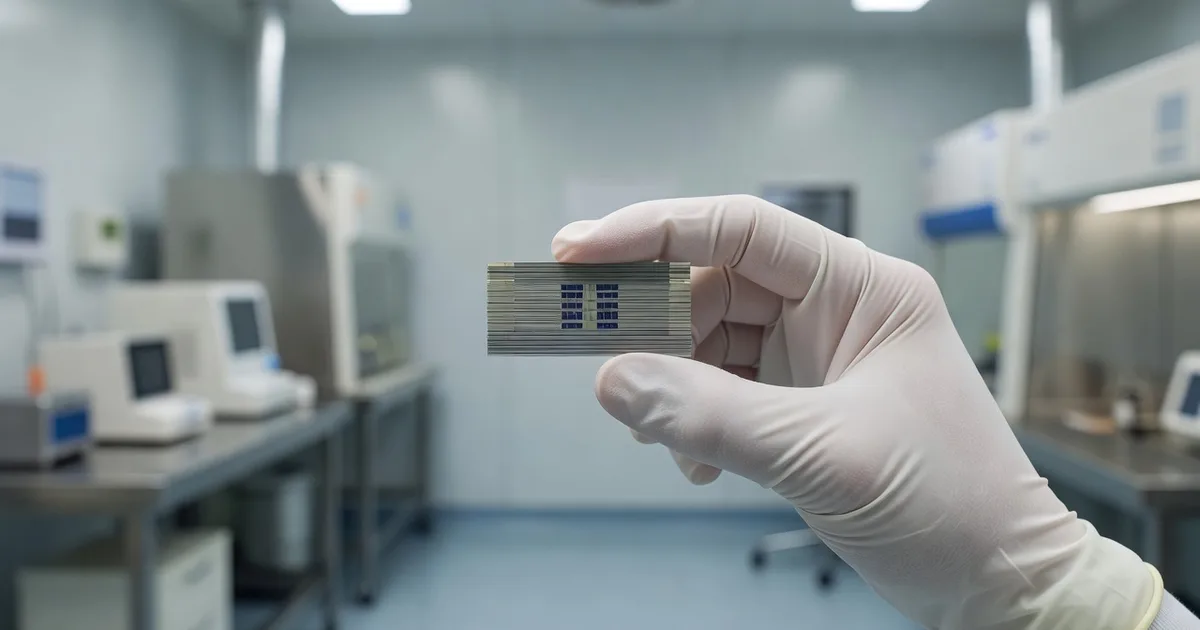
The short answer: you cannot buy a car with an all-solid-state battery in 2026. Despite more than $10 billion invested across seven major programmes, there are zero all-solid cells in customer cars. Toyota, QuantumScape and Samsung SDI have all moved their commercialisation targets to 2027–2028. The engineering is real and the pilot lines exist; the product does not.
Where each programme actually is
| Programme | Status as of 2026 | Stated target |
|---|---|---|
| Toyota | Received production approval in Japan in October 2025. Government-backed 10 GWh/year facility targeted to begin operating in 2026, with initial output earmarked for high-end Lexus models. | 2027–2028, revised from earlier guidance |
| QuantumScape | Equipment for the “Eagle Line” inaugurated February 2026. Cobra separator process integrated into production; Cobra-based QSE-5 B1 samples shipped to customers. | 2027–2028, a significant delay from earlier projections |
| Samsung SDI | Co-development agreement with BMW Group and Solid Power, supplying cells built on Solid Power’s sulfide electrolyte. | 2027 for mass production |
Status as published by each company and by industry reporting current to 2026. These are stated targets, not our forecasts, and this table’s history is that such targets move.
What “solid-state” means
A conventional lithium-ion cell moves lithium ions between electrodes through a liquid electrolyte. That liquid is flammable, and it is a large part of why a cell in thermal runaway burns the way it does. A solid-state cell replaces it with a solid — a ceramic, a sulfide, or a polymer — through which ions still travel.
Two things follow if it works. The obvious one is safety: remove the flammable liquid and you remove much of the fuel. The less obvious one matters more commercially. A solid electrolyte can physically block the lithium dendrites that otherwise grow through a cell and short it, which is what has prevented the industry from using a pure lithium-metal anode. Lithium metal stores far more energy than the graphite anode in today’s cells, so a working solid-state cell is not a 10% improvement — it is a step change in energy per kilogram.
Note the word “all-solid”. Several products marketed as solid-state are semi-solid — they still contain some liquid or gel. That is not a fraud, and semi-solid cells can be genuinely better than conventional ones, but it is not the same technology and it does not deliver the same promise.
Why it keeps slipping
The pattern across every programme is the same, and it is worth understanding before reading the next round of announcements. Laboratory breakthroughs arrive roughly when promised. The leap from a working cell to a manufactured cell adds two to four years, every time.
The reasons are mundane and mostly mechanical. A solid electrolyte has to stay in intimate contact with electrodes that expand and contract every cycle; losing contact means losing capacity. Sulfide electrolytes, the most ionically conductive family, react with moisture in air, which constrains the whole factory environment. And a separator that is defect-free in a laboratory has to be defect-free across kilometres of production at automotive cost.
None of that means the technology fails. It means that “we have a working cell” and “we can build a million of them a year at a price a carmaker will pay” are separated by a gap the industry has consistently underestimated.
How this affects a car you buy this year
It does not, and that is the practical point. If you are choosing between cars in 2026 the decision is between LFP and a nickel chemistry — NMC or NCA — and it comes down to how you charge and where you live. Waiting for solid-state means waiting several model years for a technology whose first units are earmarked for the most expensive cars on sale.
There is a second-hand angle worth naming. If solid-state arrives at scale in 2028–2030, cars sold now will be competing against it on the used market. That is a real consideration for residual values — and one nobody can size honestly today, because it depends on a production ramp that has not happened.
Frequently asked questions
Can I buy a solid-state EV today?
No. As of 2026 there are no all-solid-state cells in customer cars from any manufacturer. Some vehicles use semi-solid cells, which still contain liquid electrolyte and are a different technology.
Should I delay buying an EV until solid-state arrives?
We would not. The earliest credible volume dates are 2027–2028 for the first cells, which means several more years before they reach ordinary cars at ordinary prices, and those dates have moved repeatedly. A current LFP or nickel car bought today will do the job for the whole of that period.
Will solid-state make batteries safe?
Safer, on the strong argument that removing a flammable liquid removes fuel. But “promising” is not “proven at scale” — the failure modes of a mass-produced solid-state pack after five years of road use are not yet known, because no such pack has spent five years on the road. Treat confident safety claims about it with the same scepticism as confident date claims.
How much more range would it give?
The credible gain comes from enabling a lithium-metal anode rather than from the electrolyte itself, and prototype figures have been quoted around 800–900 Wh/L. We are not putting a range number on it here, because turning a prototype cell’s volumetric density into a real car’s range requires a pack design, a thermal system and a vehicle that do not yet exist.
Sources
- The 2026 battery scorecard: $10 billion, 7 companies, 0 all-solid cells in customer cars — programme-by-programme status
- QuantumScape, FY2026 annual report filing (SEC) — Eagle Line, Cobra process and QSE-5 sample status
- EE Power — solid-state batteries race to mass production — Toyota, Samsung SDI and Solid Power timelines
- Energies — solid-state battery technology for next-generation electric vehicles — electrolyte families and manufacturing constraints