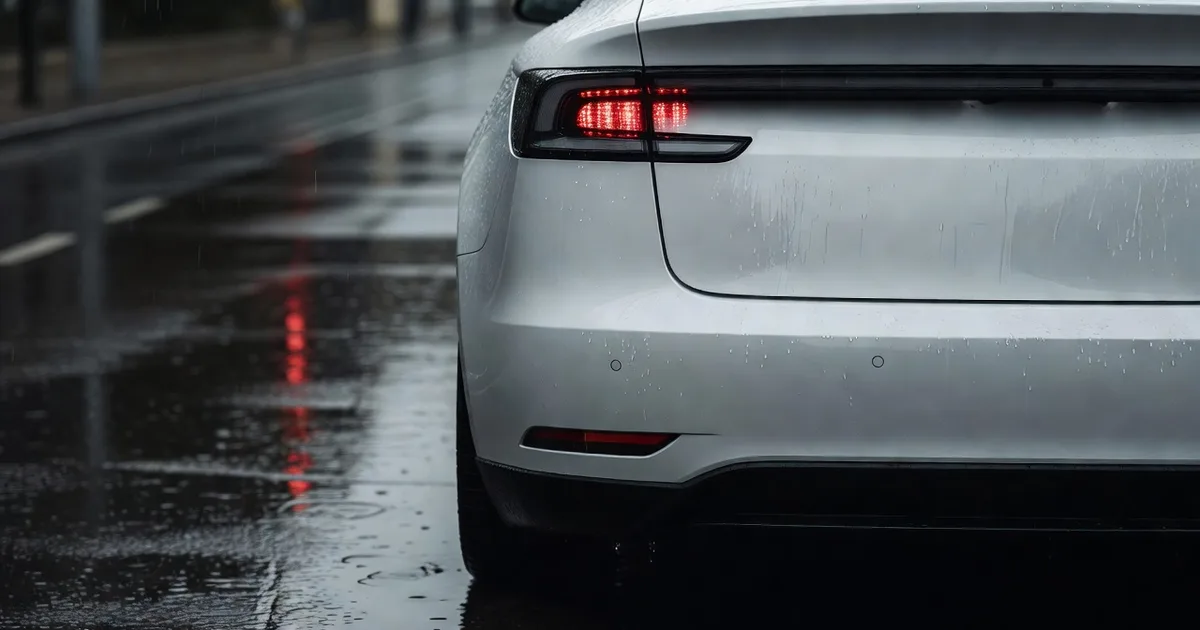
The rear-wheel-drive Model 3 is the cheapest car Tesla sells in Europe and, on our data, the most efficient car in this database: 133 Wh/km in independently observed mixed driving, against 142 for the Long Range AWD and 149 for the Hyundai Ioniq 6. It does that with a 60 kWh lithium iron phosphate pack — a different chemistry from the nickel packs in the rest of the Model 3 range, and one that changes how you are supposed to charge it.
An LFP pack, and what that means day to day
Lithium iron phosphate holds less energy per kilogram than the nickel chemistries, which is why this pack is 60 kWh where the Long Range carries 79. What it gives back is tolerance: the cell is happy sitting at a full charge, and Tesla’s own guidance for this car is to charge to 100 per cent at least once a week rather than stopping at 80. The reasoning, and the trade-off against energy density, is set out on the LFP chemistry page, and every LFP car we track is listed on electric cars with LFP batteries.
Range is the cost. 534 km on the WLTP cycle and 450 km observed, against 716 and 555 for the Long Range AWD. The 84 per cent ratio between observed and WLTP is among the better ones here, because the car is light and slippery rather than because the figure was generous.
Charging: a smaller pack fills sooner
The peak is 175 kW, well below the Long Range’s 250, but the 10 to 80 per cent window is 24 minutes against 28 — there are simply fewer kilowatt-hours to move. That is the pattern across this site: the window depends on pack size and the shape of the curve, and the peak number on the brochure predicts very little of it. The full ranking is on fastest-charging electric cars.
At home it accepts 11 kW, so an empty-to-full overnight charge is a little under six hours. And because the chemistry tolerates it, “full” here means full.
Where it is sold, and the US question
These figures are for the European car (EV Database lists it as the 2025-2026 Highland RWD). In the United States the equivalent LFP rear-drive Model 3 was the 2024 “Model 3 RWD” at 272 miles EPA; for 2026 Tesla replaced it with a larger-pack “Standard” trim that is a different car. We do not print a US range for this entry because there is no current EPA record for this pack, and a neighbouring trim’s figure presented as this car’s would be worse than a blank.
Frequently asked questions
How far does the Tesla Model 3 RWD really go on a charge?
About 450 km in independently observed mixed driving, against 534 km on the WLTP cycle. That is roughly 84 per cent of the official figure, which is a better ratio than most cars on this site manage.
Is the Model 3 RWD battery LFP?
Yes. The rear-drive Model 3 uses a 60 kWh usable lithium iron phosphate pack, unlike the nickel-based packs in the Long Range and Performance. Tesla recommends charging it to 100 per cent regularly, which is the opposite of the advice for the nickel cars.
How long does the Model 3 RWD take to charge?
About 24 minutes from 10 to 80 per cent on a DC station of 175 kW or more, and a little under six hours from empty on an 11 kW home wallbox.
Model 3 RWD or Long Range: which should you buy?
If most of your charging is at home and your journeys fit inside 400 km, the RWD costs about a quarter less, charges to 80 per cent four minutes sooner and can be filled to 100 per cent daily. If you regularly drive further than that between stops, the Long Range’s extra 105 km of observed range is what you are paying for. The two are side by side in Model 3 RWD vs Long Range.